
Why Training With a Group Does More for Your Mind Than Training Alone
Training alone is hard to keep up. Training with other people changes the math: you show up because someone is expecting you, you push through the mile you would have cut short, and you walk away with more than tired legs. At Let’s Fuel Growth, that is the whole point of building events around other people instead of a solo app and a pair of headphones.
Why a group changes what you’re willing to do
Psychology Today’s reporting on group fitness points to a simple mechanism: when the people around you are working just as hard, effort stops feeling optional. The American Council on Exercise names six specific emotional wellness benefits tied to group training, from lower reported stress to a stronger sense of belonging, and the common thread across every one is accountability. Nobody wants to be the one who quietly stops showing up.
That is the exact dynamic behind a Fuel Growth Summit. Nobody trains for a ruck or a cold plunge circuit because it sounds relaxing. People show up because fifteen other people are standing at the same trailhead at 7am, and that changes a workout you would have skipped into one you finish.
What the research says about doing hard things together
Freeletics’ research on completing challenges found that people who finish a difficult physical goal report measurable gains in confidence that carry over into parts of life that have nothing to do with fitness: work, relationships, how they handle a bad week. The pattern holds whether the goal is a 10K or a 30 pound ruck up a hill: finishing something hard with other people changes how capable you feel afterward, not just how fit you are.
None of that is a clinical claim about treating a diagnosis. It is a plain pattern: shared physical effort builds a kind of resilience that is hard to manufacture by yourself, because part of what makes it work is the other people.
What this looks like at an LFG event
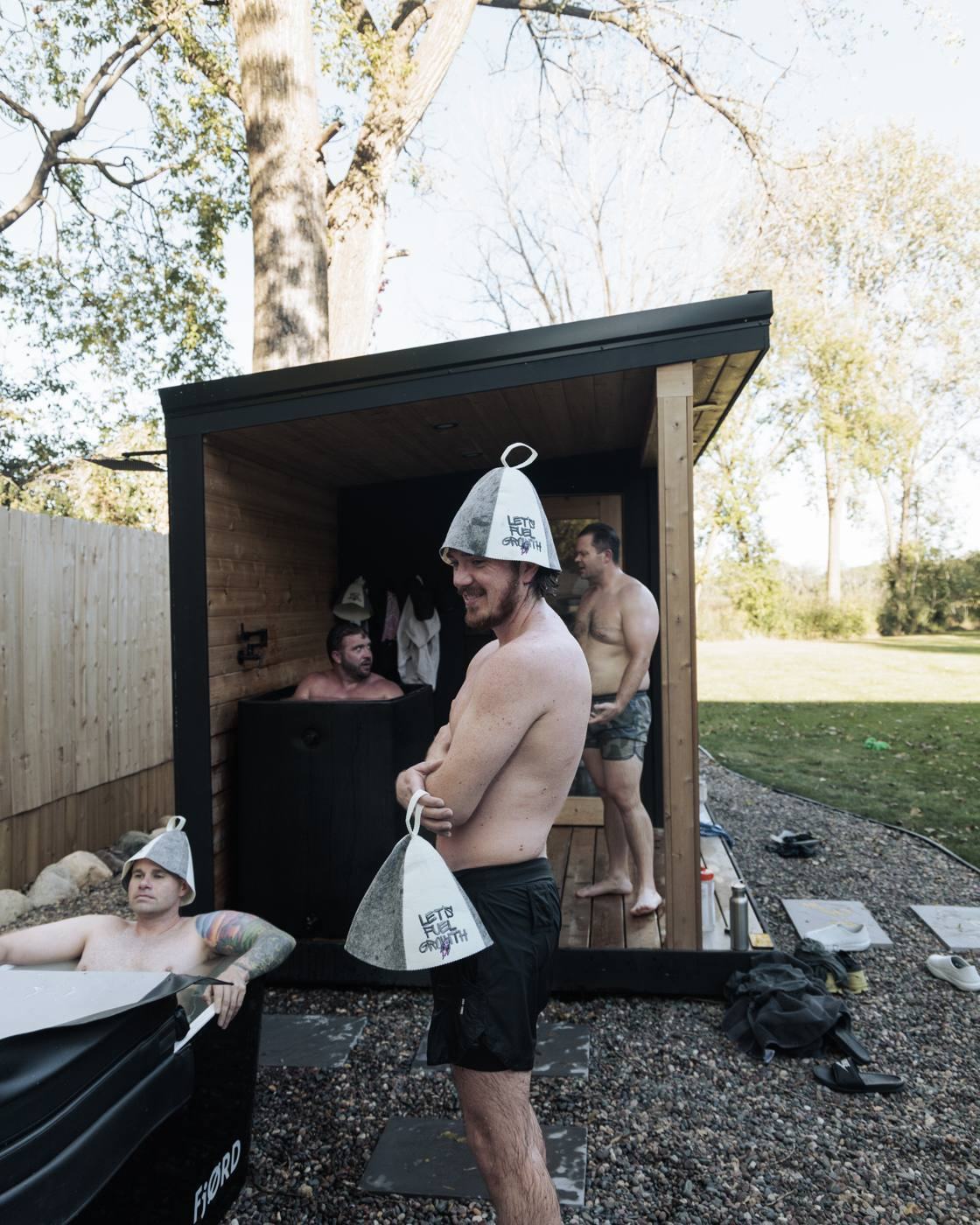
MN Mile training groups meet on their own before race day, usually without anyone from LFG organizing it. A Naughty Mile runner who signed up with three coworkers shows up to practice runs because the group chat is checking in, not because a training plan said to. The Fuel Growth Summits are built the same way on purpose: a ruck up a hill, a cold plunge, a sauna session, none of them are things most people would schedule alone, and that is exactly why they work as a group.
Everest Base Camp training follows the same pattern at a longer timescale. The people training for the 2027 trek are not carrying a weighted pack up a parking ramp stairwell because it is enjoyable. They are doing it because eleven other people on the same trip are doing it too, and a missed training week is a conversation, not a private failure. The same idea showed up in a lighter form at this year’s Fuel Growth Summits, where purposeful discomfort was the point, not a side effect.
What happens on the days nobody feels like it
Every training group has a version of the same morning: it is 35 degrees, it rained overnight, and the honest answer to “do you feel like doing this” is no. This is the morning the ACE research above keeps pointing at: consistency, not intensity, is the clearest advantage a group has over training solo. A solo workout plan survives a bad morning by willpower alone. A group plan survives it because somebody else is already standing at the trailhead, and leaving them there alone is a worse feeling than the cold.
That is not a small psychological trick. Ask anyone who trained for last year’s Everest Base Camp trip what got them up a stairwell with a 30 pound pack in February, and almost none of them say “discipline.” They say a name.
You do not need an expedition to use this
You do not need to be training for Everest to use the same idea. A standing Saturday morning walk with two friends, a recurring 6am lift with a coworker, a group chat that asks “are you still doing this” on the days you would quietly bail: that is the same mechanism at a smaller scale. The content is less dramatic than a mountain, the effect on whether you actually show up is the same.
If you are looking for a way to start, the lowest-effort version is picking one person and one recurring time, not an app and not a goal. The accountability comes from the person, not the plan.
The part that is easy to miss: it works both ways
The benefit is not only that the group gets you to the start line. It is that showing up for someone else changes how you see yourself. People who describe themselves as the one motivating others in a group consistently report higher self-worth than people who only describe themselves as being motivated. Being the person who texts “see you at 6” does as much for your own mental health as being the person who gets the text.
That is a bigger deal than it sounds. A lot of people arrive at an LFG event thinking they are there to get something, a better mile time, a finished expedition, a morning that does not start with doom-scrolling. Most leave having realized the thing that actually changed how they felt was being needed by somebody else at 6am on a cold Tuesday.
Corporate teams use the same mechanism on purpose
This is also why corporate groups keep signing up for the MN Mile Relay instead of sending four employees to run it separately. A team that trains together before race day builds the exact accountability loop described above, except the group chat is a work Slack channel and the “why” is each other instead of a personal goal. Teams that come back year after year consistently say the training in the weeks before race day did more for morale than the race itself.
Where to find that at LFG
Fuel Growth Summits run through the fall and winter (next one slated for mid-November), MN Mile training groups start forming each spring ahead of the August race, and the 2027 Everest Base Camp team trains together through the year leading up to the trek. None of it requires being an athlete first. It requires showing up to the first one.
Frequently Asked Questions
Do I need to already be fit to join a Fuel Growth Summit?
No. Summits are built for a range of fitness levels, and the point is finishing together, not finishing fast.
What if I do not know anyone else going?
Most first-time Summit and MN Mile participants come alone. The event itself is the introduction; that is a large part of why people come back.
How is this different from a regular gym class?
A gym class ends when the hour ends. These groups carry into training in between events, through a shared goal with a real date on the calendar, like race day or departure day for Everest Base Camp.
Is this only for people in recovery?
No. LFG events are open to anyone looking for community and a reason to move. People in early recovery are part of that community, not the focus of the programming.
