
How to Train for Everest Base Camp | LFG
Training for the Everest Base Camp trek starts months before anyone sets foot in Nepal, and it is less about turning into an elite athlete than it is about building a body and a mind that can keep showing up on day nine of a sixteen-day trip. If you are considering the May 2027 expedition with Let’s Fuel Growth and Elite Exped, here is what real preparation looks like.
The short version
- The trek climbs to 5,643 meters (18,513 feet) over 16 days of 5 to 6 hour daily hikes.
- Build a four to six month aerobic base plus two strength sessions a week before departure.
- Day nine, not day one, is where most trekkers decide whether they finish.
What the trek actually demands
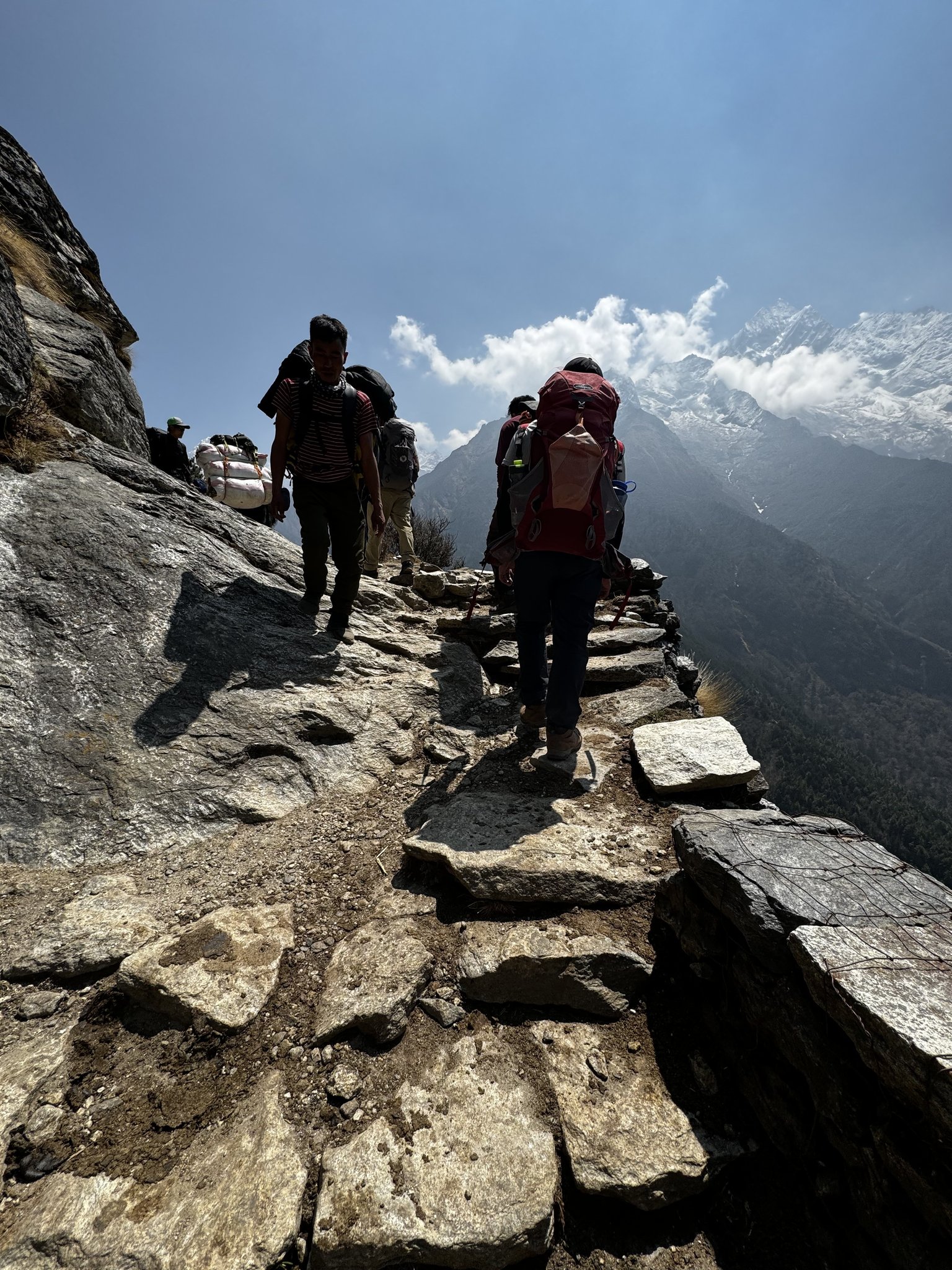
The route climbs to Everest Base Camp at 5,643 meters, about 18,513 feet, over daily hikes that typically run five to six hours. That is not a single hard day. It is five to six hours of walking, repeated for more than a week, at altitude where the air carries roughly half the oxygen it does at sea level. The physical requirement is less raw strength and more sustained aerobic capacity plus a body that has practiced recovering overnight and getting back up the next morning.
How do you build the aerobic base?
Start with three to four cardio sessions a week, four to six months out, mixing steady hikes with a weighted pack and shorter interval sessions to raise your ceiling. Stair climbs, hill repeats and long weekend hikes with 20 to 30 pounds in a daypack translate directly to trail conditions. Volume matters more than intensity here: a person who can comfortably hike four hours at a moderate pace will handle Base Camp days better than someone who can sprint but has never spent an entire afternoon on their feet.
What about strength and balance work?
Two sessions a week of functional strength, focused on legs, hips and core, protects your knees on the steep, uneven descents, which is where most trekkers actually get hurt. Add single-leg balance work and step-downs. A stronger stabilizing muscle set is what keeps a rolled ankle from ending a trip on day three instead of day thirteen.
How do you prepare for altitude specifically?
You cannot fully simulate 18,513 feet from Minnesota, but you can control the variables that make altitude sickness worse: dehydration, going out too hard on summit days, and skipping acclimatization stops. The itinerary is built around a gradual ascent with built-in rest days for exactly this reason. Practical preparation means training your hydration habits now, not just your legs, and going into the trip already comfortable eating and drinking on a schedule rather than by feeling hungry or thirsty.
Is the mental preparation different from the physical?
Most people who train hard for Everest Base Camp underestimate the mental side and then find it is the harder half. Day nine, when your legs are tired, the novelty has worn off, and you still have a week left, is where the trip is actually won or lost. This is where a group trek matters. Elite Exped’s Sherpa guides have led this exact route more times than almost anyone, and trekking alongside people working through the same fatigue builds a kind of shared accountability that solo training never replicates. Founder Ryan Rivard has said the mountain does not care how strong you are on day one, it cares whether you can keep making good decisions on day nine.
What does a sample eight-week ramp look like?
| Weeks out | Focus | Weekly volume |
|---|---|---|
| 16-12 | Aerobic base, bodyweight strength | 3 cardio sessions, 2 strength sessions |
| 12-8 | Weighted pack hikes, hills | 2 long hikes (2-3 hrs), 2 strength sessions |
| 8-4 | Back-to-back long days, gear testing | 1 six-hour hike, 1 four-hour hike, 2 strength sessions |
| 4-0 | Taper, sleep, hydration habits | Shorter sessions, full rest week before departure |
What does the 2027 expedition actually include?
The Let’s Fuel Growth and Elite Exped trek departs May 1, 2027, runs 16 days through Nepal’s Khumbu region, and is priced at $3,000 USD per person with a 10 percent non-refundable deposit to reserve a spot. It is led by Elite Exped’s Sherpa guides alongside Let’s Fuel Growth founder Ryan Rivard and Kayla Perez. You do not need previous trekking experience, but you do need a real training block behind you and an honest read on your own fitness before you commit.
What should you actually pack for training and the trek?
Break in your boots months in advance, not weeks. Blisters at mile two of a training hike are annoying, blisters at day four of a sixteen-day trek are a real problem. Train in the layering system you plan to trek in, a moisture-wicking base layer, an insulating mid layer and a wind or waterproof shell, so your body already knows how those layers feel under a full day’s pack. Trekking poles are worth training with too, since the steep descents around Base Camp are where knees take the most punishment, and a pair of poles used correctly can take real weight off every downhill step.
Why train with a group instead of alone?
Solo training gets you fit. Training and trekking with a group is what actually gets people to the finish line, because the hardest miles are rarely a fitness problem, they are a motivation problem, and motivation is easier to borrow from the person next to you than to manufacture alone at mile five. Several Let’s Fuel Growth trekkers preparing for past expeditions have organized their own local hiking meetups in the months before departure, turning solitary training into something closer to the shared experience they will have in Nepal. That habit, showing up for a hard thing because other people are counting on you too, is exactly what the trek and the training are meant to build.
FAQ
How long should I train before an Everest Base Camp trek?
Four to six months of consistent aerobic and strength training gives most people a real margin, especially if they are starting from a general fitness base rather than a dedicated hiking background.
Do I need technical climbing experience?
No. This route to Base Camp is a trek, not a technical climb, so the preparation is about endurance, altitude tolerance and mental stamina rather than rope or ice skills.
What is the single biggest training mistake people make?
Training for a hard single day instead of many moderate days back to back. Base Camp trekking rewards the person who can hike five hours today and get up and do it again tomorrow, not the person who can hike the fastest once.
If you want to see the full itinerary, pricing and FAQ, visit the Everest Base Camp 2027 page, or reach out to the team with questions before you reserve a spot. You can also support the mission without trekking by exploring how to donate to Let’s Fuel Growth.
Let’s Fuel Growth runs events, summits and expeditions that put people in the same room doing hard things together. Come find your people.