How to Volunteer at a Nonprofit: A First-Timer’s Complete Guide
Volunteering at a nonprofit can feel intimidating the first time. You might wonder what to wear, whether you need experience, or if you will be in the way. The truth is that most nonprofits are built to welcome new volunteers. They need you. This guide walks through the entire process from finding the right organization to showing up on day one, so you know exactly what to expect before you arrive.
Why Volunteer at a Nonprofit?
Volunteering delivers measurable benefits beyond the obvious good it does for the community you serve. A 2023 analysis published in BMC Public Health found that adults who volunteered at least two hours per week reported 22% lower rates of depression and significantly higher self-reported life satisfaction than non-volunteers. The Corporation for National and Community Service has documented that regular volunteers are 27% more likely to find employment after being out of work, partly because volunteering builds networks, references, and new skills in low-pressure settings.
For people interested in mental wellness, organizations like Let’s Fuel Growth combine volunteering with purposeful adventure, community events, and mental health advocacy. The result is a volunteering experience that builds your own resilience while supporting programs that help others.
Step 1: Choose an Organization That Matches Your Interests
The most sustainable volunteer commitments start with genuine interest. If you care about mental health and youth development, look for nonprofits that run direct-service programs rather than ones that only distribute funds. If outdoor adventure energizes you, organizations that blend physical challenge with their mission will keep you engaged longer than filing paperwork in an office.
Questions to Ask Before Committing
- What specific tasks do volunteers handle? (Vague answers like “whatever we need” signal a disorganized program.)
- How much time is expected per week or month?
- Is training provided, and how long does it take?
- Will I work alongside staff, other volunteers, or independently?
- What outcomes does this program track, and can you share them?
Nonprofits that can answer these questions clearly tend to have stronger volunteer programs and higher retention rates. Let’s Fuel Growth, for example, runs structured volunteer roles across events like the MN Mile, expedition support, and community outreach, each with defined responsibilities and time commitments.
Step 2: Complete the Application and Background Check
Most nonprofits that work with vulnerable populations (youth, people in recovery, individuals experiencing mental health crises) require a background check before placing volunteers. This is standard and nothing to be concerned about. The process typically takes one to two weeks and involves filling out a short application, providing identification, and consenting to the check.
Some organizations also require a brief orientation session. These orientations cover the nonprofit’s mission, the population they serve, boundaries and expectations for volunteers, and practical information like parking, emergency contacts, and reporting procedures.
Step 3: Set Realistic Expectations for Your First Day
Your first volunteer shift will not be the most productive day of your life. That is fine. The goal of day one is to learn the environment, meet the people, and understand the rhythm of the work. Here is what to expect across common volunteer settings:
| Volunteer Setting | Typical First-Day Tasks | What You Will Learn |
|---|---|---|
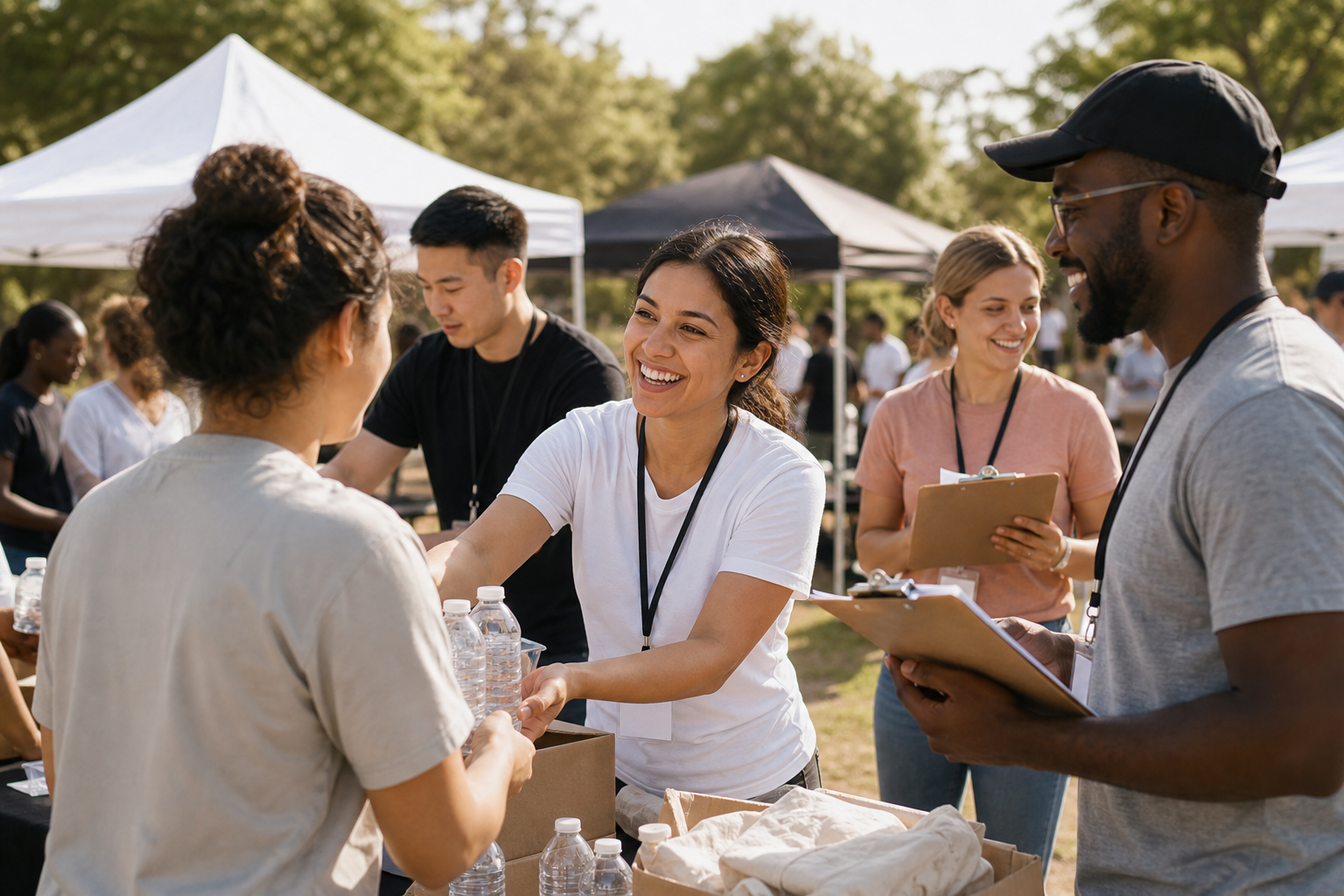
| Community event (e.g., benefit run, summit) | Registration table, course setup, participant check-in | Event flow, team communication, how to interact with participants |
| Youth mentorship program | Observe a session, assist with setup, meet staff | Group dynamics, safety protocols, rapport-building basics |
| Outdoor or adventure-based program | Gear inventory, trail prep, attend safety briefing | Environmental procedures, participant support techniques |
| Administrative or fundraising support | Data entry, event prep, donor correspondence | Organizational systems, communication standards |
Arrive 10 to 15 minutes early. Bring a water bottle, wear clothes you can move in (unless told otherwise), and bring a notebook. Writing down names and key processes on your first day saves you from asking the same questions twice.
Step 4: Build Consistency Over Time
The biggest challenge for new volunteers is not the first day. It is showing up for the fifth, tenth, and twentieth time. Research from VolunteerMatch shows that volunteers who commit to a regular schedule (even once per month) stay engaged three times longer than those who volunteer “whenever they are available.” A predictable schedule lets the organization plan around you, which makes you more useful and makes the experience more rewarding.
How Much Time Should You Give?
There is no minimum that matters universally, but two to four hours per month is enough to build familiarity and contribute meaningfully. If you can give more, weekly shifts of two to three hours tend to produce the strongest outcomes for both the volunteer and the organization. Let’s Fuel Growth tracks volunteer hours across its programs and can help new volunteers find a commitment level that fits.
Step 5: Measure Your Own Growth
Volunteering is not just about what you give. Track what you gain. After three months, ask yourself:
- Have I learned a skill I did not have before?
- Do I feel more connected to my community?
- Has my perspective on a social issue changed?
- Am I sleeping, eating, or managing stress differently?
A 2022 study in the Journal of Happiness Studies found that volunteers who reflected on their experience at regular intervals reported higher satisfaction and were more likely to continue volunteering long-term. Self-assessment is not self-indulgence. It is how you ensure the commitment stays meaningful.
Common Mistakes First-Time Volunteers Make
Knowing what to avoid is as important as knowing what to do. These are the most common stumbling points for new volunteers:
Over-committing early
Signing up for every shift in the first month leads to burnout by month three. Start with a sustainable cadence and increase only when you are certain you can maintain it.
Treating volunteering like a job interview
Some people volunteer primarily to build a resume. That motive is fine as a secondary benefit, but if it is your primary reason, you will disengage as soon as the resume line is filled. Choose work you actually care about.
Not asking for feedback
Many volunteers assume silence means they are doing well. Ask the staff directly: “Is there anything I could do differently?” This signals professionalism and helps you improve faster.
Ignoring boundaries
If the nonprofit works with vulnerable populations, there are likely rules about physical contact, personal questions, social media, and gift-giving. These rules exist to protect the people the organization serves. Follow them without exception.
Volunteering as a Path to Mental Wellness
Research from the Mayo Clinic and the National Institutes of Health consistently links volunteering to lower anxiety, reduced depressive symptoms, and greater sense of purpose. For people in recovery from substance use or navigating a mental health challenge, volunteering provides structured social engagement without the pressures of a workplace. The connection between volunteering and mental health is well-documented and accessible to anyone willing to show up.
Let’s Fuel Growth integrates volunteer opportunities with adventure-based recovery programs and community wellness events. Whether you are training for the MN Mile, supporting an Everest Base Camp expedition, or helping organize a summit, the volunteer experience is designed to be as transformative for you as it is for the people you serve.
Frequently Asked Questions
Do I need experience to volunteer at a nonprofit?
No. Most nonprofits provide all the training you need. Willingness to learn, reliability, and a positive attitude are valued far more than prior experience.
How many hours per week should I volunteer?
Two to four hours per month is enough to build a meaningful commitment. Weekly shifts of two to three hours produce the strongest outcomes, but any consistent schedule is better than sporadic availability.
What should I bring to my first volunteer shift?
Bring a water bottle, a notebook, comfortable clothes you can move in, and a willingness to listen. Arrive 10 to 15 minutes early and introduce yourself to the coordinator on duty.
Can volunteering help with my mental health?
Yes. Research shows regular volunteering reduces symptoms of depression and anxiety, increases life satisfaction, and builds social connections. Organizations like Let’s Fuel Growth combine volunteering with mental wellness programming for compounded benefits.
How do I find a volunteer opportunity near me?
Start with organizations whose mission matches your interests. Websites like VolunteerMatch and local nonprofit directories list opportunities by location and cause. For mental wellness and adventure-based volunteering in Minnesota, visit the Let’s Fuel Growth volunteer page.
Ready to Start?
The hardest part of volunteering is deciding to begin. Once you show up, the work speaks for itself. If mental wellness, purposeful adventure, and community impact resonate with you, explore volunteer opportunities with Let’s Fuel Growth. Your first shift is the only one that requires courage. Every one after that just requires showing up.
Let’s Fuel Growth runs events, summits and expeditions that put people in the same room doing hard things together. Come find your people.