
What Is Rucking and Why Does It Help With Mental Health?
Rucking is walking with a weighted pack, usually a rucksack loaded between 10 and 30 pounds, over distance or hills. It helps mental health by combining three things that reliably lower stress and anxiety in research on physical activity: sustained aerobic movement, a physical load that demands steady attention, and in a group setting, shared effort with other people. For someone training for an event like the MN Mile or Everest Base Camp, it is also the single best way to build the mental toughness the real day will demand, because a ruck forces you to keep going when it would be easier to stop.
What is rucking, exactly?
Rucking means walking or hiking with added weight on your back. The military has used it for decades to build endurance, but it has become a mainstream fitness and mental health practice because it needs almost no equipment: a backpack, some weight, and a route. A typical ruck for someone training with Let’s Fuel Growth starts at 10 to 15 pounds for 2 to 3 miles, and builds toward heavier loads and longer distances as an event gets closer, the same progression used to prepare for the altitude and terrain of Everest Base Camp.
Why does carrying weight change how a walk affects your mind?
The added weight changes a walk from background movement into something that requires your attention. You have to manage your posture, your breathing, and your pace, which pulls focus away from rumination the same way any skill-demanding movement does. Unlike running, rucking keeps your heart rate in a steady, sustainable zone, so you get the mood benefit of aerobic activity, lower cortisol and higher endorphin and serotonin activity, without the exhaustion that makes some people quit a harder workout halfway through.
How does training in a group change the effect?
Rucking alone works. Rucking with a group does more, because it adds the second ingredient that protects mental health: connection. At a Let’s Fuel Growth training ruck, nobody is moving at race pace, which means the slowest person in the group is still having a conversation with the people around them for the better part of an hour. That shared, unhurried time is where most of the community actually gets built, not at the finish line. For people managing depression or early in recovery, showing up to a scheduled group activity, knowing someone will notice if you don’t, is one of the most consistent predictors of sticking with any new habit.
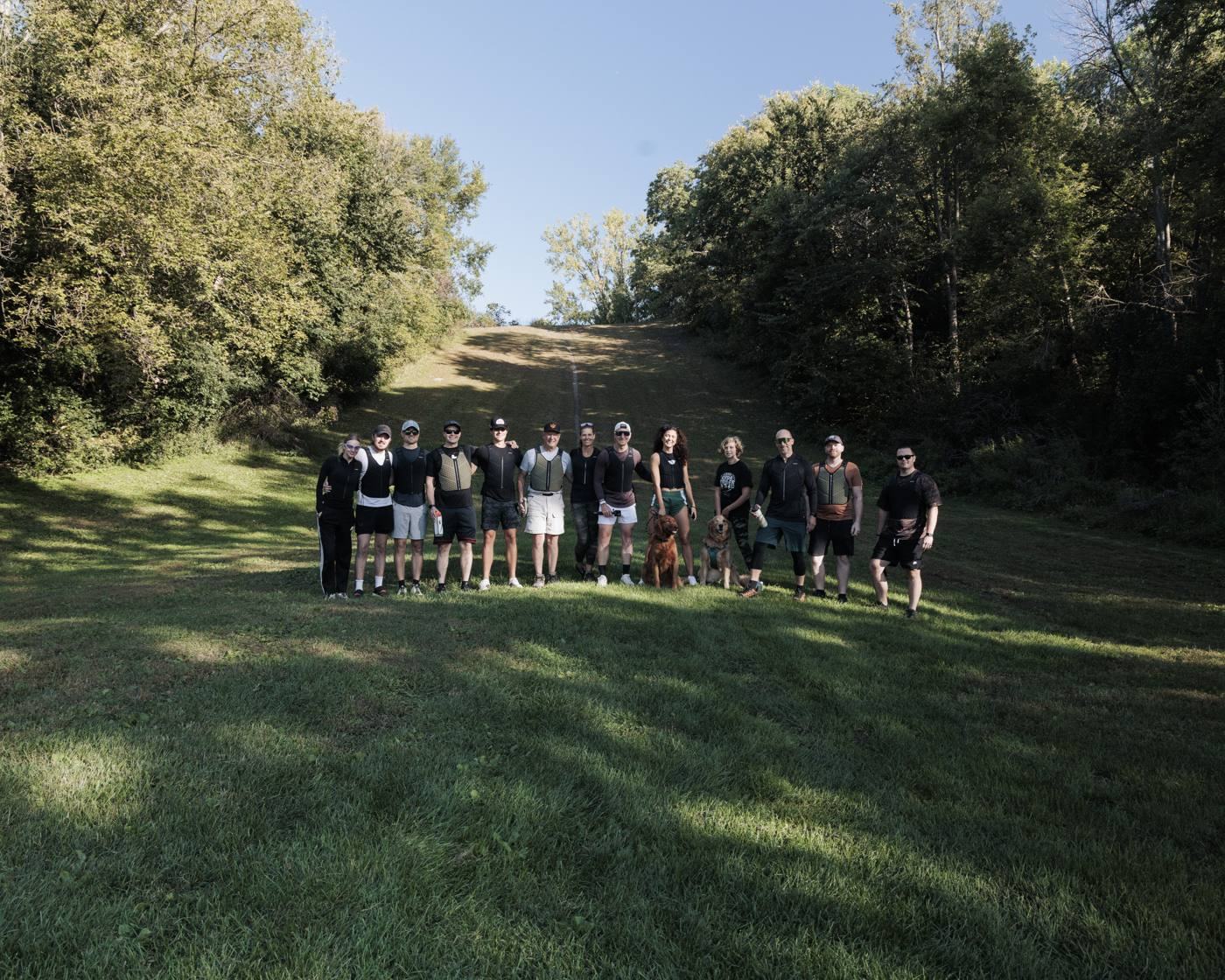
Let’s Fuel Growth’s training leads, who have years of experience coaching MN Mile and Everest Base Camp cohorts through months of progressive outdoor training, start new ruckers at the lighter end of this range on purpose: the goal of the first few sessions is building the habit of showing up, not setting a personal best.
How much weight should a beginner carry?
Start light. Ten to fifteen pounds is a reasonable starting load for most first-time ruckers, roughly the weight of a loaded daypack, and that is enough to notice the mental focus effect without risking strain on your back or knees. Add weight in small increments every few weeks rather than jumping straight to a 30 or 40 pound load. If you are training specifically for Everest Base Camp, your pack weight should build toward what you will actually carry on the trail, which your training plan will specify as the trek gets closer.
| Approach | Typical load | Best for |
|---|---|---|
| Solo walking, no weight | 0 lb | Easy recovery days, no training stress |
| Solo rucking | 10-20 lb | Building leg and core strength on your own schedule |
| Group rucking (Let’s Fuel Growth sessions) | 10-30 lb, scaled to the person | Mental health, accountability, and event-specific training together |
Is rucking only for people training for an event?
No. A standing weekly ruck with other people is a complete practice on its own, whether or not you ever register for the MN Mile or sign up for Everest Base Camp 2027. The mental health case for rucking does not depend on the finish line. It depends on the repetition: the same group, the same effort, most weeks, which is what actually changes how someone copes with a hard week, not a single big event.
Frequently asked questions
Do I need special gear to start rucking?
No. A sturdy backpack and household items like books or water jugs work for your first few sessions. A purpose-built ruck plate or weighted vest is worth buying only once you know you will keep doing it.
How often should I ruck for a mental health benefit, not just fitness?
Most people notice a mood and focus benefit from one to three sessions a week. Consistency matters more than distance: a 30-minute ruck every week beats one long ruck a month.
Can rucking replace running or strength training?
It complements both rather than replacing them. Rucking builds aerobic base and leg and back strength under load, which is exactly the base that endurance events like the MN Mile and EBC trekking require.
Where can I ruck with the Let’s Fuel Growth community?
Group training sessions are part of MN Mile and Everest Base Camp preparation. Check the events page for the current training schedule, or reach out to ask about joining a session.
If showing up with a group, carrying something heavy, and finishing together sounds like the kind of hard thing that would do you good, the next step is simple: come to a training session and try it once. Learn more about MN Mile 2026 or our Everest Base Camp 2027 training cycle.
