


Training Through a Setback: MN Mile & EBC Prep
A pulled muscle, a sprained ankle, a week where work and life ate every hour you had set aside for training. If you are getting ready for the MN Mile or putting in the miles for Everest Base Camp, a setback like this can feel bigger than it is. The honest answer: how you respond to the interruption matters more than the interruption itself.
Research on athletes recovering from injury backs this up. A 2024 narrative review on mental health and injury outcomes found that the psychological response to a training interruption, not just the physical injury, shapes how fast someone returns to full capacity and whether they stay engaged with the activity at all. The people who treat a setback as information keep going. The people who treat it as proof they were never cut out for this quietly stop.
Why a Setback Feels Like Failure, and Why It Is Not
Training for something hard, whether that is a 5K on the Naughty Mile course or a multi-month Everest Base Camp prep plan, becomes part of your identity fast. Miss a week and it is easy to tell yourself the whole plan is ruined. It is not. A single interrupted week changes almost nothing about your trajectory over a sixteen-week plan. What actually derails people is the story they tell themselves about the missed week, not the missed week.
There is a specific pattern worth naming here. The first missed session triggers guilt. Guilt triggers avoidance, because showing back up means admitting you fell behind. Avoidance turns one missed week into three. By the time three weeks have passed, restarting genuinely is harder, not because of fitness loss but because of the mental weight that built up while you were away. Catching the pattern at step one, the guilt, is what keeps a short setback short.
The Three Things That Actually Help
1. Name what you can still do
A sprained ankle does not touch your upper body. A respiratory bug does not touch your mobility work. A demanding work week does not touch the ten minutes you have before bed. Most setbacks close one door and leave several open. Spend five minutes listing what is still available to you this week instead of cataloguing what is not. This single reframe is the difference between a week of doing nothing and a week of doing something smaller.
2. Tell your training group
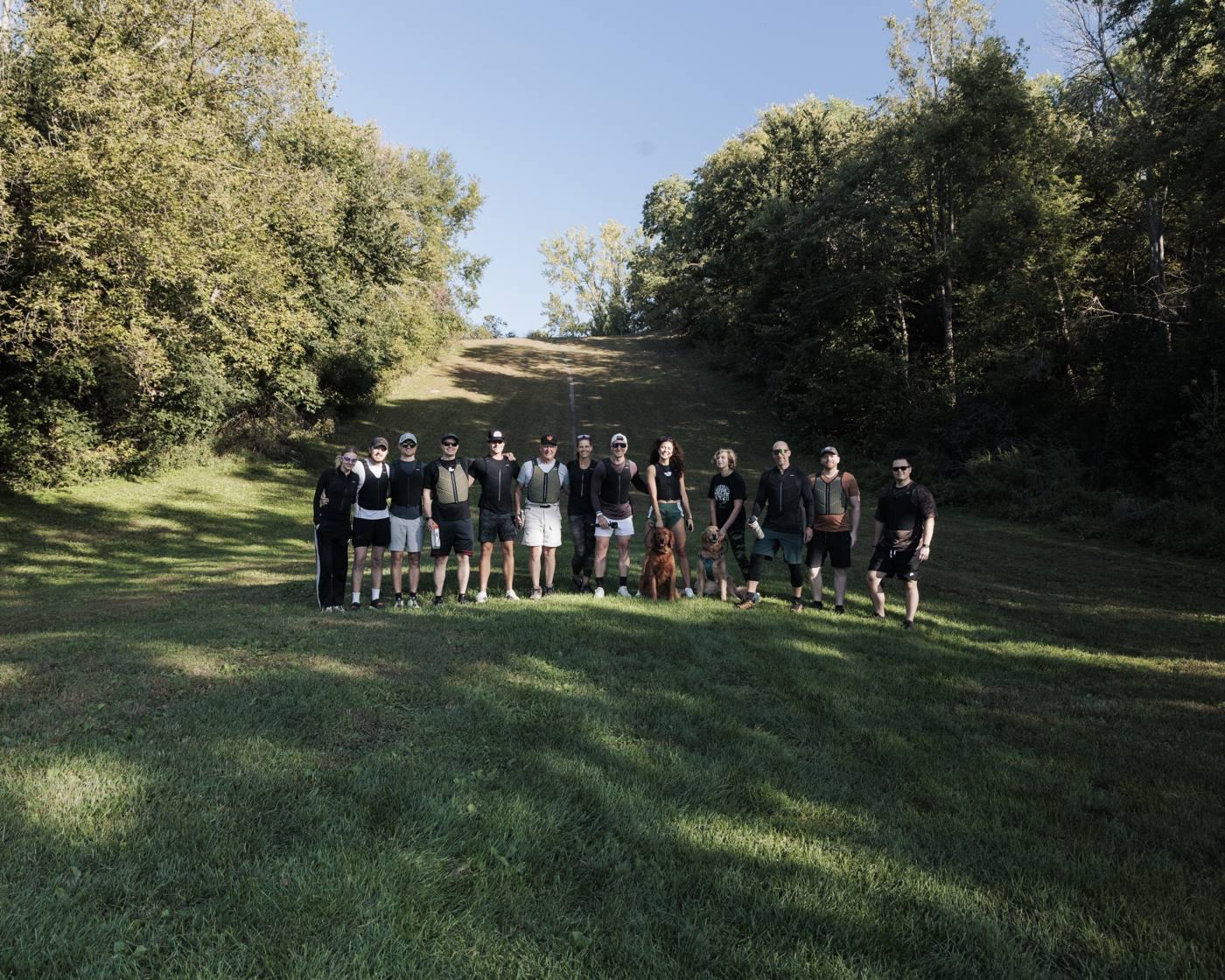
People training alone tend to quietly disappear when something goes wrong, because nobody is checking. People training with others tend to come back faster, because somebody notices and asks. If you are part of an MN Mile training group or an Everest Base Camp cohort, say out loud that you are dealing with a setback. That single act of saying it, out loud, to another person, is what keeps you accountable to showing back up. It also does something else: it lets the people around you adjust the group pace or route instead of leaving you to catch up on your own.
3. Set a re-entry date, not a re-entry mood
Waiting until you feel ready to restart training can stretch a three-day setback into a three-week one, because motivation rarely arrives on its own before action does. Pick a specific date to resume, even at reduced intensity, and treat that date like a commitment you made to someone else. Put it in a calendar. Tell your group what day you are back. The date does the work that waiting for motivation never will.
What This Looks Like on an Everest Base Camp Timeline
Everest Base Camp training runs for months, with distance, elevation gain and pack-weight goals building in stages toward the trek. A missed week inside that timeline is a rounding error if you handle it the right way: scale the next session down rather than skipping it entirely, and let your training lead or guide know so the plan can flex around your actual recovery instead of around a guess. The expeditions that struggle are rarely the ones where someone got hurt. They are the ones where someone got hurt and disappeared instead of saying so.
What This Looks Like Before the MN Mile
The Naughty Mile and the Nice Mile exist as two different events for exactly this reason. If an injury means your Naughty Mile pace goal is no longer realistic three weeks out, the Nice Mile is still a full, legitimate way to show up on race day with your family, your co-workers or your training group. Changing your plan to match where your body actually is right now is not quitting. Staying away because the original plan fell through is.
A Quick Comparison: Pushing Through vs. Adjusting Around
| Situation | Pushing through | Adjusting around |
|---|---|---|
| Sprained ankle, week 6 of 16 | Risk of re-injury, longer total delay | Upper body and core work, return to running once cleared |
| Missed week from work travel | Guilt-driven, often avoided entirely | Shortened sessions resumed immediately on return |
| Illness close to event day | Underperformance, slower recovery after | Rest, then a realistic goal adjustment for that specific event |
When a Setback Is Actually a Signal to Stop and Reassess
Not every setback is a normal bump in a training plan. If pain is worsening rather than easing, if a minor injury has not improved after a week of genuine rest, or if three or more sessions in a row have been skipped without a clear physical reason, that is a different conversation than the one above. That pattern is worth raising directly with your training lead, your doctor, or both, rather than pushing forward on willpower alone. The goal of any Let’s Fuel Growth training plan, whether it is building toward the MN Mile or an Everest Base Camp expedition, is to get you to the start line in one piece, not to get you there fastest.
Frequently Asked Questions
Does missing a week of training ruin my progress?
No. Fitness built over weeks of consistent training does not disappear in a single missed week. Measurable fitness loss from inactivity generally takes two to three weeks to show up in any meaningful way, so a four or five day setback has little lasting effect on a well-built plan.
Should I keep training through pain?
No. Pain that changes your gait, your form or your range of motion needs rest and, if it persists past a few days, a medical opinion. The goal during a setback is to modify training around the injury, not push through it and risk turning a short delay into a long one.
What if I miss more than one session with my group?
Tell someone. The people training alongside you for the MN Mile or an Everest Base Camp expedition are there because showing up together works better than showing up alone. A short message saying where you are at keeps you connected to the group even on the weeks you cannot physically train with them.
How do I know when to fully restart versus ease back in?
Ease back in. A reasonable rule is to resume at roughly half the volume or intensity you were doing before the setback, for about the same amount of time the setback lasted, then build back toward your prior level from there.
If you are navigating any of this right now, inside an Everest Base Camp training block or ahead of the next MN Mile, you do not have to figure out the restart alone. That is the entire point of training with people instead of an app: somebody notices when you go quiet, and somebody is still there when you come back.
Let’s Fuel Growth runs events, summits and expeditions that put people in the same room doing hard things together. Come find your people.
