How Does Purposeful Adventure Help People in Recovery?
Purposeful adventure helps people in recovery by replacing the neurochemical reward cycle of substance use with challenging physical experiences that produce natural endorphins, build self-efficacy, and create strong social bonds in substance-free environments. Research and clinical practice increasingly support adventure-based interventions as a complement to traditional recovery programs, particularly for sustaining long-term engagement after initial treatment.
What Is Purposeful Adventure in the Context of Recovery?
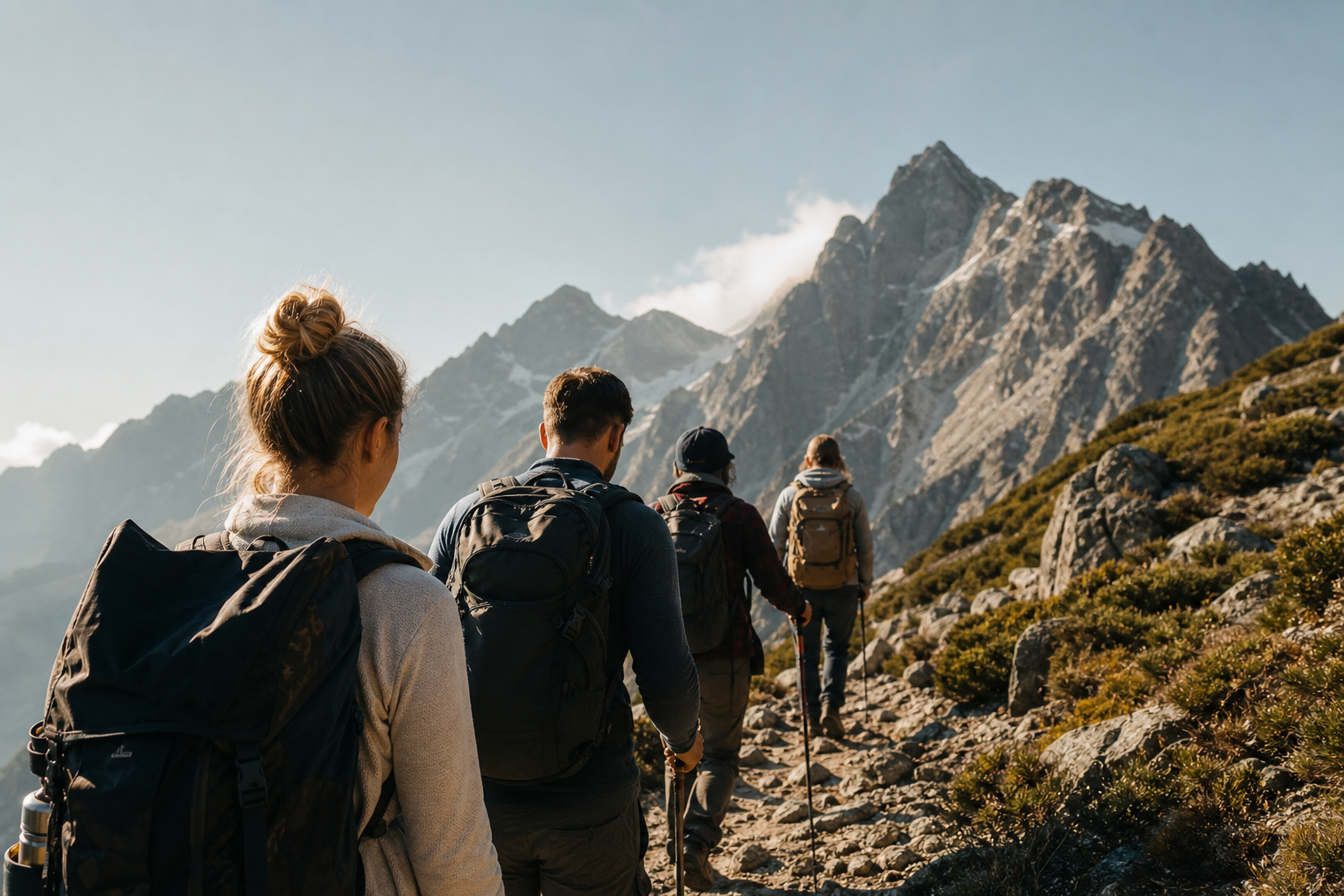
Purposeful adventure refers to structured outdoor or physical challenges undertaken with an intentional goal beyond recreation. In recovery settings, this means activities like backcountry trekking, distance running, rock climbing, or expedition travel that are paired with guided reflection, group processing, and personal goal-setting. The “purposeful” distinction separates it from casual recreation: every activity is designed to build a specific psychological or social skill.
Let’s Fuel Growth uses purposeful adventure across its programs, from the MN Mile benefit run to the Everest Base Camp expedition. Each event places participants in graduated physical challenges that serve as metaphors and practice fields for the psychological work of recovery.
How Does Physical Challenge Affect the Brain During Recovery?
Substance use disorders alter the brain’s dopamine and endorphin systems. During active addiction, the brain becomes accustomed to artificially elevated levels of these chemicals. Early recovery is often marked by anhedonia (the inability to feel pleasure from normal activities) because the brain’s natural reward system needs time to recalibrate.
Vigorous physical activity accelerates this recalibration. A 2021 meta-analysis published in Drug and Alcohol Dependence reviewed 43 studies and found that structured exercise programs during recovery were associated with:
- A 30% reduction in cravings across substance types
- Improved sleep quality in 78% of participants
- Measurable increases in brain-derived neurotrophic factor (BDNF), which supports neuroplasticity and mood regulation
- Reduced cortisol (stress hormone) levels within the first four weeks of consistent exercise
Adventure activities tend to produce these effects more strongly than gym-based exercise because they combine physical exertion with novelty, social interaction, and environmental stimulation. Hiking at altitude, for example, engages cardiovascular, vestibular, and proprioceptive systems simultaneously while placing the participant in an unfamiliar environment that demands adaptive thinking.
Why Does Self-Efficacy Matter for Sustained Recovery?
Self-efficacy, the belief in your ability to handle difficult situations, is one of the strongest predictors of sustained recovery. A study in the Journal of Substance Abuse Treatment (2019) found that individuals with high self-efficacy scores at the six-month mark of recovery were 2.4 times more likely to maintain sobriety at the two-year mark compared to those with low self-efficacy.
Purposeful adventure builds self-efficacy through a mechanism that talk therapy alone cannot replicate: embodied mastery. When you summit a mountain, finish a difficult run, or navigate a trail in adverse weather, your body and mind record the experience as evidence that you can handle hard things. This evidence is concrete, not conceptual. It lives in your muscles, your breathing, and your memory of the moment you wanted to quit but did not.
How Adventure Builds Self-Efficacy Differently Than Traditional Exercise
| Factor | Gym or Studio Exercise | Purposeful Adventure |
|---|---|---|
| Novelty | Low after the first few sessions | High (new terrain, weather, elevation each time) |
| Social bonding | Moderate (parallel activity) | High (interdependent group challenges) |
| Perceived risk | Low | Moderate (managed, but feels real) |
| Completion as identity evidence | Incremental | Landmark (“I climbed that mountain”) |
| Environmental stimulation | Controlled, indoor | Variable, natural, multi-sensory |
The landmark quality of adventure experiences is particularly important in recovery. Completing a difficult physical challenge creates a reference point that the individual can return to mentally when facing cravings or self-doubt. “I made it to Everest Base Camp” carries a weight that “I went to the gym on Tuesday” does not.
How Does Group Adventure Reduce Isolation in Recovery?
Social isolation is one of the most dangerous risk factors for relapse. SAMHSA’s National Survey on Drug Use and Health consistently identifies weak social support as a primary predictor of return to substance use. Many people in recovery have damaged or lost relationships during active addiction, and rebuilding a social network in sobriety can feel overwhelming.
Group adventure solves this problem structurally. When you trek, run, or climb alongside other people, shared physical challenge creates bonds faster than conventional social settings. A study in Social Psychological and Personality Science (2014) found that groups who endured a moderately painful shared experience reported significantly stronger social bonds than groups who shared an easy or pleasant experience. This is sometimes called the “suffering together” effect, and it operates powerfully in adventure-based recovery programs.
Let’s Fuel Growth’s programming leverages this dynamic deliberately. The shared adversity model that underlies its events means participants form connections based on mutual respect and shared accomplishment, not on shared substances. For people in recovery, this distinction is critical: the social environment is both substance-free and inherently bonding.
What Does the Research Say About Adventure Therapy Outcomes?
Adventure therapy is a recognized therapeutic modality with a growing evidence base. Key findings from peer-reviewed research include:
- A 2020 systematic review in Complementary Therapies in Clinical Practice found that wilderness and adventure therapy programs produced significant improvements in self-concept, interpersonal skills, and behavioral functioning across populations including adolescents in treatment, adults in recovery, and veterans with PTSD.
- The Outdoor Behavioral Healthcare Council (OBHC) reports that adolescents completing adventure therapy programs show sustained improvements in depression, anxiety, and family functioning at one-year follow-up, with effect sizes comparable to or exceeding traditional outpatient therapy.
- A 2023 pilot study on trekking-based interventions for adults in recovery found that participants reported a 41% reduction in craving intensity and a 38% improvement in emotional regulation scores after a two-week guided trek, with gains maintained at six-month follow-up.
These outcomes are not replacements for clinical treatment. Adventure therapy works best as a complement to evidence-based therapies like cognitive behavioral therapy (CBT), motivational interviewing, and medication-assisted treatment. The physical and social elements of adventure address dimensions of recovery that talk therapy alone often leaves untouched.
How Can Someone in Recovery Get Started with Purposeful Adventure?
Starting does not require an expedition to Nepal. The principle scales down to any activity that involves graduated physical challenge, social participation, and reflective practice. Practical entry points include:
- Community wellness events: Events like the MN Mile are designed to welcome participants of all fitness levels, including the Nice Mile track for families and first-time runners.
- Group hiking or trail running: Local outdoor groups in most metro areas offer structured group activities that provide the social bonding and physical challenge without the cost of travel.
- Volunteering with adventure-based nonprofits: Volunteering with Let’s Fuel Growth places you in the community without the pressure of being a participant, which can be a comfortable first step.
- Expedition programs: For those further along in recovery, programs like the Everest Base Camp trek offer transformative experiences with built-in support and guided reflection.
The key principle is starting at a level that is challenging enough to be meaningful but not so difficult that failure is likely. Graduated challenge, consistently, is the mechanism that builds self-efficacy over time.
Frequently Asked Questions
How does purposeful adventure help people in recovery?
Purposeful adventure helps people in recovery by producing natural endorphins, building self-efficacy through physical mastery, and creating strong social bonds in substance-free settings. Research shows it reduces cravings, improves sleep, and supports long-term sobriety when combined with clinical treatment.
Is adventure therapy a replacement for traditional addiction treatment?
No. Adventure therapy is a complement to evidence-based treatments like CBT, motivational interviewing, and medication-assisted treatment. It addresses dimensions of recovery (physical confidence, social connection, identity rebuilding) that talk therapy alone often does not reach.
Do I need to be physically fit to participate in adventure-based recovery programs?
No. Programs like the MN Mile offer tracks for all fitness levels, and most adventure-based nonprofits design activities with graduated difficulty so participants can start where they are.
What types of adventure activities are used in recovery programs?
Common activities include trekking, distance running, rock climbing, kayaking, and team-based outdoor challenges. The key factor is not the specific activity but the combination of physical challenge, social participation, and guided reflection.
Where can I find adventure-based recovery programs in Minnesota?
Let’s Fuel Growth offers adventure-based community programs including the MN Mile, Fuel Growth Summits, and the Everest Base Camp expedition, all designed to be accessible and welcoming to people in recovery.
Let’s Fuel Growth runs events, summits and expeditions that put people in the same room doing hard things together. Come find your people.