

How to Support Someone Training for a Big Challenge
Someone in your life just signed up for something hard. Maybe it is the Naughty Mile at next year’s MN Mile, maybe it is a seat on the Everest Base Camp trek, maybe it is a first 5K. The honest answer to how you support them is simple: show up consistently, ask what they actually need instead of guessing, and treat the goal as something you are both invested in, not a hobby you tolerate.
The short version
- Check in weekly on the training itself, not just the outcome, and put it on your own calendar.
- Showing up for one session a month matters more than matching their fitness level.
- Avoid comparisons and unsolicited risk talk; ask about the actual training or altitude plan instead.
- Distance is not a reason to disengage: a weekly voice memo or a tracked mileage sheet works as well as training together.
- Being physically present at the start or finish line is the single highest-impact moment of support.
What does someone training for a big challenge actually need from you?
They need three things, in this order: a person who checks in without being asked, a training partner for at least some of the miles, and someone who does not quietly resent the time it takes. Research on exercise adherence backs this up directly. A review in PMC’s analysis of social reward and exercise experiences found that people are far more likely to stick with a hard physical goal when someone else is tracking their progress with them, not just cheering from the sidelines.
At Let’s Fuel Growth we see this every season, in the MN Mile training groups and in the small cohort that trains together for Everest Base Camp. The people who finish are rarely the ones who trained alone. They are the ones who had someone ask “how was your run” on a Tuesday, not just “good luck” the morning of the event.
How do I check in without sounding like I am nagging?
Ask about the training, not the outcome. “How did the long run go Saturday” lands differently than “are you still doing this.” The first says you remember and care about the process. The second sounds like you are waiting for them to quit. Pick a cadence you can actually keep, weekly is plenty, and put it on your own calendar so it is not improvised.
Do I have to train with them to be useful?
No, but it helps more than almost anything else you can do. You do not need to run the same distance. Showing up for one training session a month, walking a portion of a long run, or meeting them at a sauna recovery session after a hard week all count as showing up. What matters is that your presence is scheduled, not spontaneous, so it becomes something they can plan around.
If distance or logistics make training together impossible, a standing text thread works. Ask them to send one line after every session, even a bad one. The habit of reporting in keeps a goal from living only in someone’s head, which is where most big goals quietly die.
What should I avoid saying?
Skip the comparisons (“my cousin did that in half the time”) and skip the unsolicited risk talk (“isn’t that dangerous”). Both are about you processing your own discomfort with their goal, not about supporting them. If you are worried about safety on something like an Everest Base Camp trek, ask what the training and altitude plan actually looks like instead of voicing the worry out loud. Our own training breakdown and altitude prevention guide are good things to read together before you ask.
What if the event is a fundraiser or team event, not a solo goal?
Then the most useful thing you can do is remove a logistical barrier. Register as part of their team for the MN Mile, volunteer a morning, or help them plan a packing list rather than asking how the fundraising is going. A person training for a shared event like the Naughty Mile or Nice Mile is usually more motivated by a training partner showing up at the start line than by a check written from a distance.
What if you live far away or cannot train with them in person?
Distance removes the option to run together, it does not remove the option to be their accountability. Ask for a weekly voice memo instead of a text, it takes thirty seconds to send and carries more than a one-line update. Offer to be the person who tracks their long-run mileage on a shared spreadsheet, or send one specific, researched piece of help each week, a route suggestion, a gear recommendation, a question answered from our own Everest Base Camp packing list. Specific, useful contact beats a generic “thinking of you” message every time.
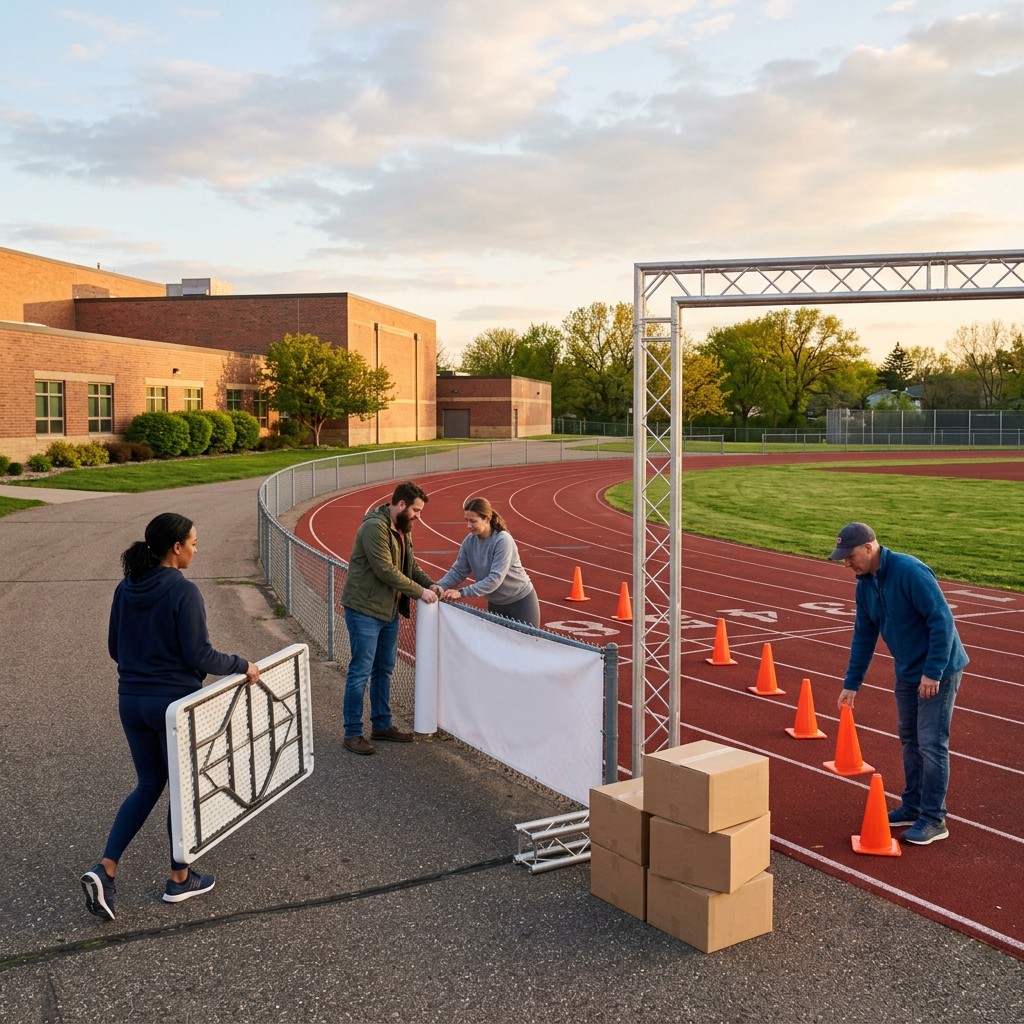
Plan to show up for the actual event if you can. A training partner who cannot make every session but is standing at the Minnetonka High School track on MN Mile morning, or waiting at the trailhead, still delivers the single highest-impact moment of support there is: being physically present at the finish.
Frequently Asked Questions
How often should I check in on someone’s training?
Weekly is enough for most training blocks. Daily check-ins start to feel like monitoring rather than support, and monthly is too infrequent to catch the weeks where motivation dips.
What do I do if they want to quit?
Ask what specifically feels hard before offering an opinion. Most people who talk about quitting mid-training are tired or discouraged by one bad week, not actually done with the goal. Help them adjust the plan for that week rather than talking them out of or into anything.
Can I support someone without being fit myself?
Yes. The most valuable support role is consistency and attention, not matching fitness level. Walking a mile with someone training for a much longer distance still counts as showing up.
What is the single best thing I can do this week?
Put one specific date on your calendar, a training session, a call, or a volunteer shift, rather than offering open-ended support. A scheduled commitment is the difference between intention and follow-through.
Let’s Fuel Growth runs events, summits and expeditions that put people in the same room doing hard things together. Come find your people.
